Why we have been working on the same question for over 20 years.
The technology has changed. The task never has.
aiio stands for "AI Improves Organizations".
aiio GmbH grew out of more than two decades of work on one question: how can an organization be enabled to understand itself, and to keep developing out of that understanding?
Since 2002 the technological possibilities have changed fundamentally several times.
But only artificial intelligence and AI agents now make it possible to give an organization an organizational "self-understanding", and to generate organizational capabilities from it - capabilities that make it more resilient against growing external and internal complexity.
aiio provides a system for that: the "Organizational Intelligence System".
This is not about software
Organizations grow complex faster than people can follow. Processes sit in systems, knowledge in documents and in people's heads, and with every change the distance grows between what is documented and what actually happens. That is what we work on - so an organization knows continuously how it really works, and turns that knowledge into decisions, evidence and new capabilities. We build tools because it does not work without them. Not the other way round.
The derivation - ThinkingWhat has changed - and what has not
We began with process documentation on SharePoint, for industry and the public sector. Both have stayed: the sectors, and the question of how an organization gets at its own knowledge. Only what we answer it with has changed.
- 2002The start
Lintra GmbH is founded in Magdeburg as a technology holding. Several companies come out of it - one of them is Lintra plus GmbH, which later becomes aiio. The subject is the same from the start: helping organizations know their own workflows.
- 2007Quam
Through a dedicated company (Lintra plus GmbH), entered at the Amtsgericht Stendal under HRB 6552, Quam is developed: an integrated management system on a SharePoint basis, in which organizations are documented as a whole and become auditable.
- 2014Best in Cloud award
The sister company LINTRA Solutions GmbH wins the Computerwoche Best in Cloud award in the SaaS category. At that point the group is a Microsoft Gold competence partner.
- 2020AI-native rebuild
Development begins on a fundamentally new AI-native system that puts the use of AI for improving organizations at its centre and is meant to make Organizational Intelligence possible.
- 2022Launch of "aiio"
March 2022: the first step is done. The AI-based BPM system "aiio" is on the market, and LINTRA plus GmbH becomes aiio GmbH. The name becomes the programme: AI Improves Organizations.
- 2024CHIP award & Series A
With its AI-native BPM system, aiio wins the CHIP award 2024 as overall winner in the BPM comparison for the first time, together with the highest recommendation rate among the users surveyed. In a Series A funding round the company also receives an eight-figure valuation.
- TodayOrganizational Intelligence System
Across four solutions building on one another (ProcessCollector, ProcessMagnet, ProcessForge and DataForge), aiio places an Organizational Intelligence System on the market that puts organizations in a position to develop organizational intelligence and, on that basis, to generate systemic capabilities that make for high organizational resilience.
More capable, not more dependent
Technology should make organizations more capable, not more dependent. That is what we ask to be measured against.
Empowerment and resilience - chapter 9 →The aiio management team
Four managing directors, all four operational, all four a long time in this market.
"We have seen the problems inside the organizations at issue here from close up - at large corporations, in the Mittelstand and in the public sector - and spent the last years building a system that meets them efficiently."

Decides the strategic direction of aiio and sets the emphases and objectives of the company. Anyone wanting to know what aiio's vision is, and why its solutions deliberately do not pursue certain things, gets the answer from him - the long version sits under "Thinking".

Accountable for development and day-to-day operations at aiio: that development practice follows current thinking, and that aiio itself works efficiently, is no accident but a standing task.

Accountable for how aiio comes across in public - and for that impression doing justice to what aiio's solutions can deliver. Point of contact for press, analysts and associations.

Accountable for sales at aiio and for building a network of consultancies and integrators. For a project that means: whoever accompanies the transformation inside a company does not have to be from aiio - but they know our solutions and do not have to start from scratch.
Our expert panel: well advised across several disciplines
For the questions where software fails in audited environments, we bring in experts who are better at it than we are - from research, enterprise sales, the capital markets and leadership work in exceptional situations. They bring their expertise into our decisions before those decisions are made.

Examines the technical foundations: security architecture, embedded systems and the requirements that regulated environments place on software before it may be operated there. Previously at Zalando and Deutsche Bank.

Brings go-to-market experience from enterprise software and B2B SaaS - what large corporations actually examine when buying software, and where new categories in this market regularly fail. Previously at Adobe, SAP and Spryker.
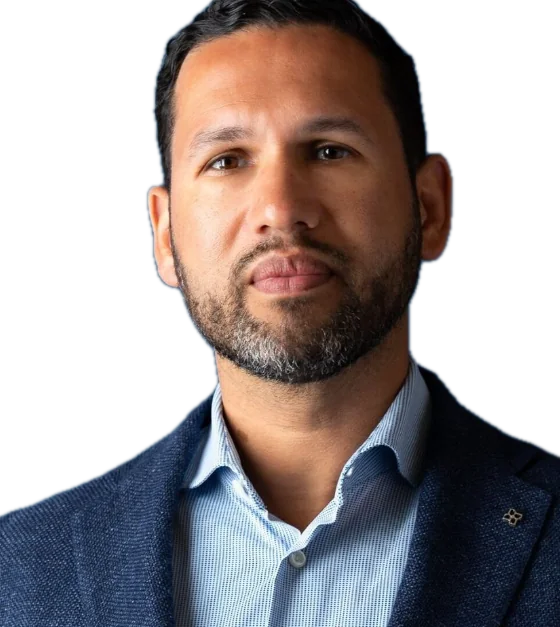
Sees the company from the investor and M&A perspective: what an organization is worth over the long term, which capabilities carry that value - and which only look as though they do. Previously at GETEC, MVV Energie and Rothschild.

Works on the question of how organizations stay able to act under permanent change, uncertainty and growing complexity - and what leadership has to deliver for that.
What can be verified
Certified to ISO/IEC 27001, twice running the CHIP test winner in the BPM comparison, institutionally funded - and the AI platform developed in-house since 2020, not bought in. All of it with a number and a date, so that procurement, legal or information security do not have to ask first.
Klausenerstraße 10a, 39112 Magdeburg. Amtsgericht Stendal, HRB 6552. VAT ID DE 254461500.
Overall winner in the BPM comparison in 2024 and 2025, plus the highest recommendation rate. Survey among more than 2,000 software users.
Certificate 02260301-27-01, valid until 4 June 2029. Scope and certificate are published.
Institutionally funded since 2024, eight-figure valuation - relevant when an undertaking has to hold for years.
Development, operation and support at one location in Magdeburg, more than thirty people. Not outsourced, not offshore, no intermediate layer between a question and support.
Member. Taking part in the regulatory debate rather than waiting it out.


Data processing, sub-processors and reporting channels: to the Trust Center →
Let us talk.
A conversation, not a pitch: twenty minutes of listening to what is coming up - and then saying whether one of the solutions helps with it or not. That too is a lesson from two decades.